Best Smart Baby Monitors 2026: Top Video & Audio Monitors for Europe
Best Smart Baby Monitors 2026: Top Video & Audio Monitors for Europe
Bringing a new baby home is one of life's most joyful moments — and one of its most anxious. A reliable smart baby monitor gives parents the peace of mind to rest, work, or move freely around the home while staying connected to their little one. In 2026, smart baby monitors have advanced dramatically, offering HD video, two-way audio, sleep tracking, and seamless smartphone integration. This guide covers everything European parents need to know to choose the best smart baby monitor, including EU safety standards, key features, and practical buying advice.
Why Smart Baby Monitors Are Worth It in 2026
Traditional audio-only monitors have served parents well for decades, but smart monitors offer a fundamentally different level of reassurance. Here's what makes them stand out:
- Live HD video: Watch your baby in real time from your smartphone, tablet, or a dedicated parent unit — day or night, thanks to infrared night vision.
- Two-way audio: Speak soothingly to your baby without entering the room, helping them settle without full wake-up disruption.
- Motion & sound alerts: Receive instant notifications when your baby moves or cries, even when you're in another part of the house or briefly stepping outside.
- Sleep analytics: Premium models track sleep patterns over time, helping you identify routines and optimise rest for both baby and parents.
- Remote pan & tilt: Adjust the camera angle remotely from your phone — no need to physically reposition the unit.
For parents already building a connected home, a smart baby monitor integrates naturally alongside other devices. Our Smart Home Devices Guide 2026 covers how to build a cohesive, intelligent living space around your family's needs.
EU Safety Standards & Regulations for Baby Monitors
Safety is paramount when choosing any device for a baby's room. In Europe, several standards and regulations apply:
- CE Marking: All baby monitors sold legally in the EU must carry the CE mark, confirming compliance with EU health, safety, and electromagnetic compatibility (EMC) requirements.
- Radio Equipment Directive (RED) 2014/53/EU: Wireless baby monitors must comply with this directive, which governs radio frequency emissions and interference.
- RoHS Directive: Restricts the use of hazardous substances in electronic equipment — important for devices used in a child's environment.
- GDPR Compliance: Smart monitors that stream video to the cloud must comply with GDPR. Look for manufacturers with EU-based data storage or clear, transparent privacy policies. Avoid devices that store footage on servers outside the EU without explicit consent mechanisms.
- EU Plug Standard (Type C/E/F): Ensure the monitor's power adapter uses the correct Schuko or Type E/F plug for your country. Reputable brands sold through EU retailers will include the appropriate adapter.
Always purchase from authorised EU retailers to guarantee compliance. Grey-market imports may lack CE marking and could pose safety or privacy risks.
Key Features to Look for in a Smart Baby Monitor
With dozens of models available across Europe, knowing which features matter most will help you cut through the noise.
Video Quality & Night Vision
Look for a minimum of 1080p Full HD resolution for a clear, detailed image. Night vision quality varies significantly between models — infrared (IR) night vision is standard, but some premium monitors offer colour night vision using ambient light, providing a more natural image. Check the stated night vision range; for a standard nursery, 3–5 metres is typically sufficient.
Connectivity: Wi-Fi vs. DECT
This is one of the most important decisions you'll make:
- Wi-Fi monitors connect to your home network and allow remote viewing from anywhere via a smartphone app. They offer greater flexibility but depend on your internet connection and introduce cloud privacy considerations.
- DECT (Digital Enhanced Cordless Telecommunications) monitors operate on a dedicated, encrypted radio frequency (1.9 GHz in Europe) with no internet connection required. They offer lower latency, stronger privacy, and work even during internet outages — a popular choice among privacy-conscious European parents.
Many families opt for a hybrid approach: a DECT monitor for everyday home use and a Wi-Fi model for travel or remote monitoring when away from home.
Battery Life & Range
For parent units, battery life is critical. Look for a minimum of 8–10 hours of continuous use on a full charge. Range matters too — in a large home or garden, you'll want a monitor rated for at least 300 metres open-air range (real-world indoor range will be lower due to walls and interference).
Additional Sensors
Many smart monitors now include environmental sensors that monitor the nursery's temperature and humidity — both important for infant comfort and safety. Some premium models add air quality monitoring, detecting VOCs (volatile organic compounds) that can affect a baby's breathing environment.
Smart Home Integration
If you're building a connected home, check whether the monitor integrates with your existing ecosystem. Some models work with Google Home or Amazon Alexa, allowing voice-activated viewing on a smart display. For homes with advanced automation, integration with a smart home hub can enable routines — such as dimming lights automatically when the baby falls asleep.
Audio-Only vs. Video Monitors: Which Is Right for You?
While video monitors dominate the market in 2026, audio-only monitors still have a place — particularly for parents who prioritise simplicity, battery life, and privacy.
- Audio monitors are lighter, cheaper (typically €20–€60 for quality DECT models), and have longer battery life. They're ideal for parents who simply want to hear their baby without the complexity of video or apps.
- Video monitors range from around €60–€80 for entry-level Wi-Fi models to €200–€350+ for premium units with pan/tilt, sleep tracking, and environmental sensors. The visual reassurance they provide is invaluable for new parents.
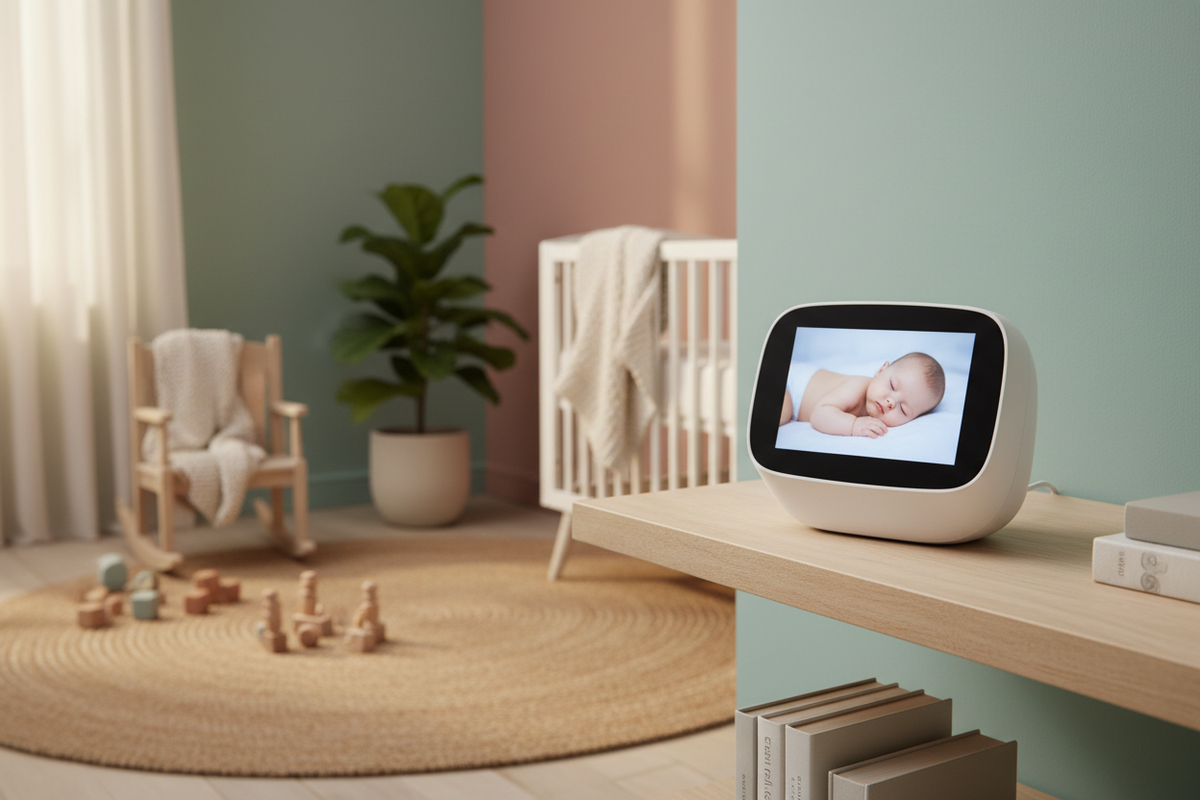
- Smart display monitors (with a dedicated touchscreen parent unit) offer the best of both worlds — no smartphone dependency, with a large, clear screen and intuitive controls.
Consider your lifestyle: if you frequently move between rooms or have a large home, a video monitor with a dedicated parent unit offers the most reliable experience. If you're comfortable managing everything from your phone, a Wi-Fi camera monitor is more flexible.
Smart Buying Tips for European Parents
- Prioritise privacy: For a device streaming live video of your child, privacy should be non-negotiable. Choose brands with strong encryption (look for WPA2/WPA3 for Wi-Fi models), two-factor authentication for app access, and clear GDPR-compliant data policies.
- Check for local language support: Ensure the companion app and parent unit interface are available in your language — Spanish, Dutch, French, German, Italian, and other EU languages are supported by most major brands.
- Consider the nursery layout: A fixed-angle camera may be sufficient for a small room, but a pan/tilt model gives you full coverage of a larger nursery without repositioning.
- Think long-term: Some smart monitors can be repurposed as home security cameras or general room monitors once your child is older — a useful consideration for value.
- EU warranty: EU consumer law guarantees a minimum 2-year warranty. Some premium brands offer extended warranties of 3–5 years, which is worth factoring in for higher-priced models.
- Avoid second-hand monitors: Baby monitors, particularly older Wi-Fi models, may have unpatched security vulnerabilities. Always buy new from an authorised EU retailer.
Conclusion: Choose Peace of Mind for Your Family
The best smart baby monitor in 2026 is the one that fits your family's lifestyle, home setup, and privacy expectations. Whether you opt for a straightforward DECT audio monitor, a feature-rich Wi-Fi video camera, or a premium smart display unit with sleep analytics, investing in a quality monitor is one of the most practical decisions new parents can make.
Focus on CE certification, strong encryption, and the connectivity type that suits your home. If you're building a broader smart home ecosystem, a monitor that integrates with your hub or smart displays adds genuine convenience — and as your child grows, many of these devices continue to earn their place in your home.
For homes where security is a priority beyond the nursery, explore our guide to the Best Smart Locks 2026 to complete your home safety setup.
Ready to find the perfect baby monitor? Browse our full range of smart baby monitors and family safety devices at onlinestore24.eu — with fast EU-wide shipping and all prices in euros.